Project Overview
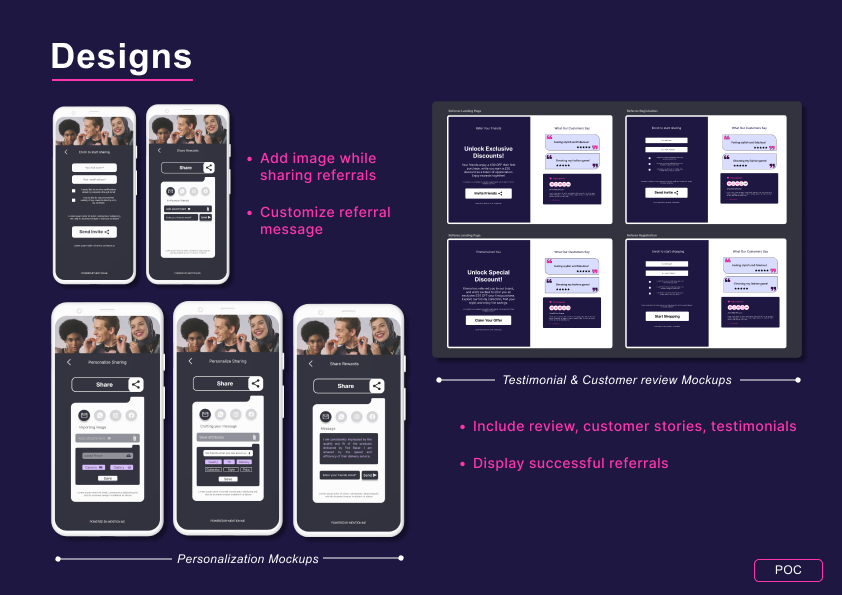
This UX research project was conducted over a period of 4 months with focus on enhancing Mention Me’s referral program designs by aligning them closely with user motivations and behaviors. The study aimed to optimize user engagement, leveraging psychological triggers and user-centered design strategies. The journey encompasses various stages, beginning with a focus group study to empathize and gain insights into customer journey within referral program. Drawing inspiration from Cialdini’s principles of persuasion, referral designs were introduced and examined. To validate these insights, an eye-gaze tracking study was conducted. The analysis prompted the integration of personalization and social proof elements into the referral designs.
Role
UX Researcher
UI Designer
Design Strategist
Research Question
What are different aspects and elements of referral design implemented by fashion e-commerce brands, powered by Mention Me, that capture user's attention during the referral program experience?
Hypothesis
User's attention will primarily be drawn to the images rather than the text on the referral landing page.
Methodology
Qualitative + Quantitative
Focus group, Eye gaze tracking, Prototype Testing, User Feedback



Evaluation
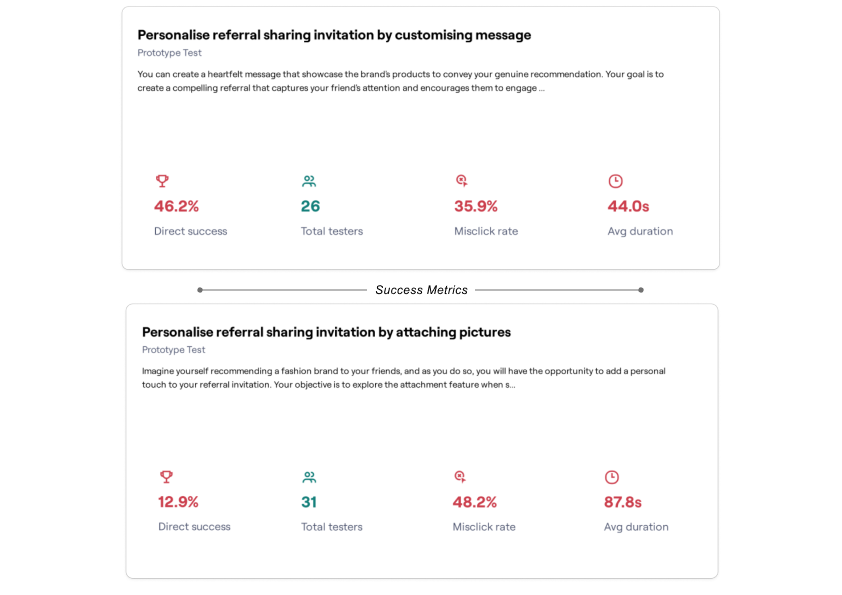
UX and referral programs are related in the context of creating a positive user experience. The high success rate for both features demonstrated users proficiency in engaging with the proposed personalization elements. This shows that people are comfortable and capable of utilizing these features, indicating that they align with user expectations and are user-friendly. Hence, it is reasonable to conclude that Mention Me can explore this concept to enhance their referral programs. However, the recommendation also highlights the importance of refining the prototype to mitigate misclicks and ensure seamless execution.
Recommendations
Simplify Message Categorization: Consider implementing a categorization system for messages. This will streamline the message-writing process, allowing users to choose from pre-defined categories that align with their intentions. Additionally, provide users with the ability to edit auto-generated messages. This customization feature would empower users to add a personal touch and make the messages more authentic.
Prioritize Picture Attachment: Since participants responded positively to image attachment, implementing this option within the referrals can elevate engagement.
Implement Strength Ranking: Introduce sliders or a ranking system to gauge the strength of feelings about message elements. This enable users to express the level of sentiment they want to convey, adding an extra layer of personalization.
Conclusion & Future Work
In Conclusion, this project lays the foundation for continual improvements in referral programs. Building upon the insights gained, investigating the interplay between personalization and various customer segments could lead to tailored referral experiences that resonate with diverse user preferences. Additionally, testing testimonial integration in referral programs could provide valuable insights.


